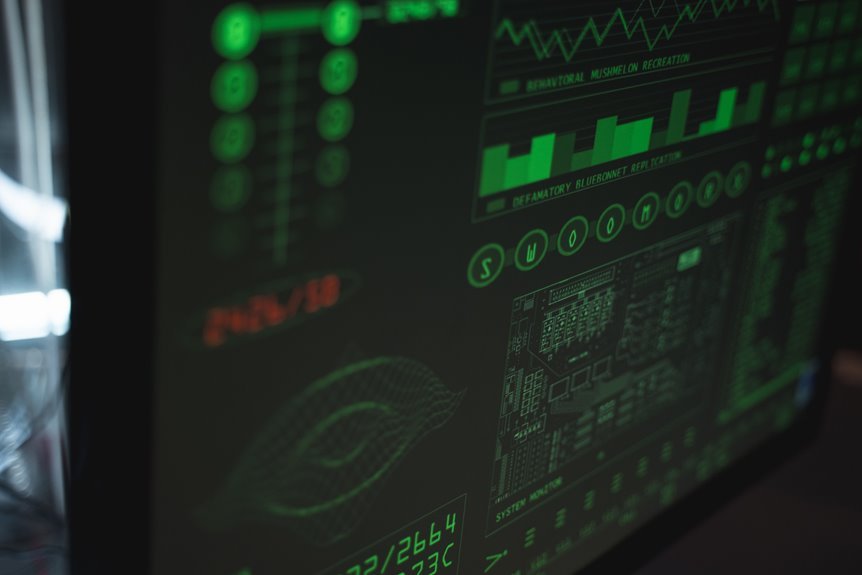
The AstralPulse Monitoring Console consolidates five identifiers into a single, coherent view. It tracks real-time astral data streams with clarity and precision. The system emphasizes continuous observation, anomaly detection, and performance benchmarks while maintaining secure, auditable access. Governance shapes normalization, scalability, and security. Immediate anomaly responses and cohesive visualization support rapid decision-making across platforms. The discussion centers on how these elements integrate and what gaps might still exist as usage expands.
What Is AstralPulse Monitoring Console and Why It Matters
AstralPulse Monitoring Console is a centralized system designed to track and interpret astral data streams in real time.
The document presents a concise AstralPulse overview, detailing how Monitoring significance emerges through continuous observation, anomaly detection, and performance benchmarks.
It addresses System integration with existing platforms and outlines Security considerations, ensuring resilient access, data integrity, and controlled exposure in dynamic, freedom-oriented environments.
How AstralPulse Aggregates the Five Identifiers Into a Unified View
To unify disparate data streams, the system integrates the five identifiers by mapping each to a common ontology and applying standardized normalization rules. The process, with disciplined governance, enables identifiers aggregation in a coherent workflow, transforming disparate signals into a cohesive, searchable sequence.
This results in a unified view that supports consistent comparisons, auditing, and cross-system interpretation for informed decisions.
Detecting Anomalies: Visual Cues and Real-Time Responses
Detecting anomalies hinges on recognizing deviations from established baselines through real-time visual cues and immediate response protocols. The monitoring system employs clever visualization to delineate outliers, trends, and spikes, enabling rapid interpretation.
Anomaly signaling channels trigger predefined mitigations, prioritizing alert clarity, minimal noise, and unambiguous steps, ensuring operators can act decisively within tight timeframes and preserve operational integrity.
Architecture, Security, and Scalability for Operation Teams
How do architecture, security, and scalability align to support operation teams in a high-stakes monitoring environment?
The discussion emphasizes architecture challenges and cloud native design, aligning with monitoring workflows.
Security implications influence user access controls and audit logging, while scalability strategies enable resiliency testing and incident response.
Data governance underpins consistent practices, ensuring disciplined architecture, robust security, and adaptable, freedom-friendly systems.
Frequently Asked Questions
How Is User Privacy Protected in Astralpulse Monitoring Console?
The system protects user privacy through robust privacy controls and data governance. It enforces access restrictions, encryption, audit trails, and data minimization, ensuring transparent handling while empowering users to control what is collected and shared.
Can Astralpulse Integrate With Legacy On-Prem Systems?
AstralPulse can integrate with legacy on-prem systems through secure adapters, balancing integration latency with real-time synchronization. It ensures data residency controls, offering configurable geographic hosting while preserving autonomy and freedom for compliant, auditable deployment.
What Are the Licensing Options for Teams?
Licensing options for Teams collaboration are era-agnostic and scalable. The approach emphasizes modular plans, perpetual or subscription models, and enterprise licenses. This structure respects autonomy, enabling teams to adjust usage freely while maintaining predictable costs and governance.
How Often Is the Data Refreshed Across Dashboards?
A beacon in fog, the data refresh cadence ensures timely updates. Data refresh cadence governs how often dashboards pull new data, enabling dashboard synchronization with near-real-time integrity while preserving performance and user autonomy across analyses.
Is There an Offline Mode for Monitoring Outages?
Yes, there is an offline module for monitoring outages. It operates with limited live data, preserving essential signals in a reliable data retention archive, enabling retrospective analysis while connectivity is unavailable.
Conclusion
The AstralPulse Monitoring Console distills five identifiers into a single, coherent view, enabling real-time visibility, consistent normalization, and auditable governance. Its anomaly detection and immediate response capabilities support rapid decision-making, while scalable architecture and strong security safeguard operations. Through clear visualization and disciplined processes, teams can maintain reliability and situational awareness across platforms. In essence, the console acts as a lighthouse, guiding complex data streams toward informed, timely actions.
